
Piastri's 'Progress' Is a Ledger Story, Not a Track Story
**मुख्य उत्तर:** ऑस्कर पियास्त्री ने यूनाइटेड स्टेट्स ग्रैंड प्रिक्स से पहले कहा कि उनकी कार 2026 सीज़न में हाई-स्पीड कर्व्स में मज़बूत और लो-स्पीड कर्व्स में कमज़ोर रही है, और यह कमी जल्दी ठीक नहीं हो सकती। यह ड्राइवर की फ़ॉर्म-वापसी नहीं, कार-अवधारणा की संरचनात्मक सीमा है जिसे लागत-सीमा और ATR ने बाँध रखा है। **मुख्य तथ्य:** - पियास्त्री के 2026 परिणाम: जापान P3, मियामी P3, बाकू P13 (ड्राइवर ग़लती), मलेशिया P6, सिंगापुर P5, पहले दो राउंड में दो DNS। - लैंडो नॉरिस ने 2025 का ख़िताब 13 अंकों के अंतर से जीता; 2026 में हंगरी और नीदरलैंड्स में लगातार जीत दर्ज की। - COTA का अपग्रेड पियास्त्री के शब्दों में 'थोड़ी मदद' वाला है; कोई लैप-टाइम दावा या सहसंबंध डेटा उपलब्ध नहीं। - लो-स्पीड कमज़ोरी क्वालिफाइंग, गंदी हवा में रेस पेस और मोनाको/सिंगापुर/हंगरी जैसे सर्किटों पर सबसे महँगी साबित होती है। - स्रोत में आउटलेट का नाम और प्रकाशन तिथि दर्ज नहीं; 'MCL40' और मलेशिया-सिंगापुर क्रम सत्यापन लंबित है। **स्रोत:** मूल सामग्री एक अनाम ड्राइवर-इंटरव्यू रिपोर्ट है जिसका प्रकाशन-स्रोत और तिथि उपलब्ध नहीं; तकनीकी दावे 'सत्यापन लंबित' श्रेणी में रखे गए हैं। **संबंधित प्रश्न-उत्तर:** प्रश्न: क्या पियास्त्री की लो-स्पीड कमज़ोरी सेटअप से ठीक हो सकती है? उत्तर: नहीं, पियास्त्री के अनुसार यह ढाँचे की सीमा है जिसे जल्दी ठीक नहीं किया जा सकता, इसलिए मरम्मत अगली कार-अवधारणा में तय मानी जा रही है। प्रश्न: COTA का अपग्रेड पियास्त्री के अंतराल को पाट सकता है? उत्तर: यह शून्य-दशमलव-एक सेकंड श्रेणी का सर्किट-फ़िट अपग्रेड है, अंतराल पाटने वाला पैकेज नहीं, क्योंकि टीम ने कोई लैप-टाइम दावा नहीं किया। प्रश्न: पियास्त्री के सीज़न का सबसे बड़ा नुक़सान कहाँ हुआ? उत्तर: पहले दो राउंड के दो DNS से लगभग तीस अंकों का छेद बना, जो कार-अवधारणा से नहीं, विश्वसनीयता से जुड़ा है।
Oscar Piastri said one sentence in Thursday's press conference at COTA that was the cleanest technical admission of his season, and almost nobody read it as one. He said the high-speed corners have been where this car is strong, and the low-speed corners are where it has struggled. In the same breath he said that what has been challenging this year cannot be fixed quickly. Two sentences, one answer. The first should have been read as data. The second was an ending.
The headline that came out of that room was about a 'sign of progress'. I went looking for the timing sheet behind that headline. There were no sector times. No GPS speed traces. No long-run data. No CAD file for a floor edge, no wind-tunnel-to-track correlation report. There were adjectives — strong, struggle, progress. I have been reading these tables for twenty years, and I don't trust a table until I have seen the entry list. Here there was no table at all.
So this piece is about one thing: Piastri's 'progress' is not the story of a driver finding rhythm. It is the story of a car concept that a cost cap has locked in place. 'Progress' is the word teams use when development velocity is gone and only expectation management is left.
Hold the background steady, because the whole tension of this story comes from there. In 2026 this team was at the front and the internal gap was thirteen points. Thirteen points across a full season — barely more than half a race win. That is the kind of margin decided by one safety car, one traffic-hit qualifying, two seconds in a pit stop. Which means last season there was no category gap between Piastri and Lando Norris. There was only a points gap.
Then the rules changed. The 2026 regulation set is a reset — roughly a fifty-fifty split between combustion and electric power in the power unit, active aero modes, and the aerodynamic testing restriction framework that hands weaker teams room on paper and squeezes the strong ones. Every reset does the same thing: whoever understood the previous concept best has the most to unlearn.
And inside that set, Piastri's season reads like this. Two DNS in the first two rounds — twice the car did not start a race. Third in Japan. Third in Miami. Thirteenth in Baku, and that was driver error, not the car — dropping from the top three to thirteenth. Sixth in Malaysia. Fifth in Singapore. In the same stretch, Norris took back-to-back wins in Hungary and the Netherlands.
Here I have to stop and be honest, because this column's entire method depends on it. I opened the file expecting a progress report and found a data-integrity problem instead. A designation like 'MCL40' does not verify independently. A Malaysian round preceding Singapore does not match the 2026 calendar order. The source carries no named outlet and no publication date. That does not make the story false. It means every number I use goes into the 'verification pending' column, and I build claims only on what survives. What I have that cross-checks two ways is the driver's own words and the circuit's own geography. Start there.
What Piastri described was not a setup complaint. It was the car's signature. 'The high-speed corners are where we've been stronger this year and the low speeds are where we've struggled' is not a sentence a driver says after one weekend. It is the sentence a driver says when the problem has stopped being a weekend and become a platform. This is a defined performance signature, not a setup-window issue. The difference between those two is the difference between Friday night and next season.
Sitting next to that sentence is another one: you can't quickly fix it. That is not the language of a bolt-on deficit. It is the language of floor ride-height window, front-axle load, mechanical grip. No team says that in the second half of a season unless the fix has already been scheduled for the next concept iteration rather than this car. And that is where the word 'progress' starts doing its real work — it is not a technical word. It is a calendar word.
Now the 'few new bits' announced before Austin. Read the driver's own phrasing: 'hopefully help us a little bit', 'hopefully at least we can exploit some strengths'. No lap-time claim. No correlation reference. No indication of a concept change. That is expectation-management language, and I will grade it as such. The COTA upgrade is a paper upgrade — announced, not validated. Its realistic class is a tenth of a second, and even that is circuit fit rather than gap closing.
That shrinkage is not an accident. The cost cap and the ATR framework make a late-season upgrade cadence marginal by construction. When a team says in this part of the year that it has been trying things, that sentence is not evidence of development. It is a correlation warning. Wind-tunnel numbers that do not survive the track is the oldest story in this sport, and under a cost cap the story has become more expensive, because an upgrade spent in the wrong direction eats the slot for the next one too.
The real question is not whether an upgrade arrives. It is whose signature the upgrade carries. I opened that admin file expecting villains and found a queue of signatures — the aerodynamics lead, the chief designer, the sporting director, and the finance officer who says how much room is left in this season. Naming one of them is easy and it is the biggest lie available. Even a marginal upgrade is four signatures and a budget line. 'Progress' is that line's public translation.
Now the part I consider most important and the least read. Piastri said that what worked for him last season has become his downfall this year. This is a technical problem arriving in a driver's clothes. When a car's required input technique inverts — entry rotation, energy management in the braking phase, deployment-limited traction — the driver's body keeps doing what a decade taught it, and the car turns that into a penalty.
I want to repeat something I have seen across several sports, because I think motorsport undervalues it. The hardest part of a comeback is never the body. It is the moment the body has to accept that the instinct which used to save it is now the instinct that puts it at risk. For a driver, the car does that to you. Piastri himself said there is almost a mental challenge to it. Do not take that sentence lightly. If a driver is still unable to renew his instincts three-quarters of the way through a season, the problem sits as much in the design as in the learning speed the team has given him.
And this is where the 2026 ruleset stings most. If the power split is roughly even and active aero is in play, low-speed performance stops being purely a downforce question. It becomes a question of electrical deployment and traction. My suspicion — and I will call it a suspicion, because I do not have the public data — is that part of what we are calling a chassis weakness is an energy-management and power-unit-integration story. If so, the fix path is entirely different and far longer. Swapping an aero part will not touch it.
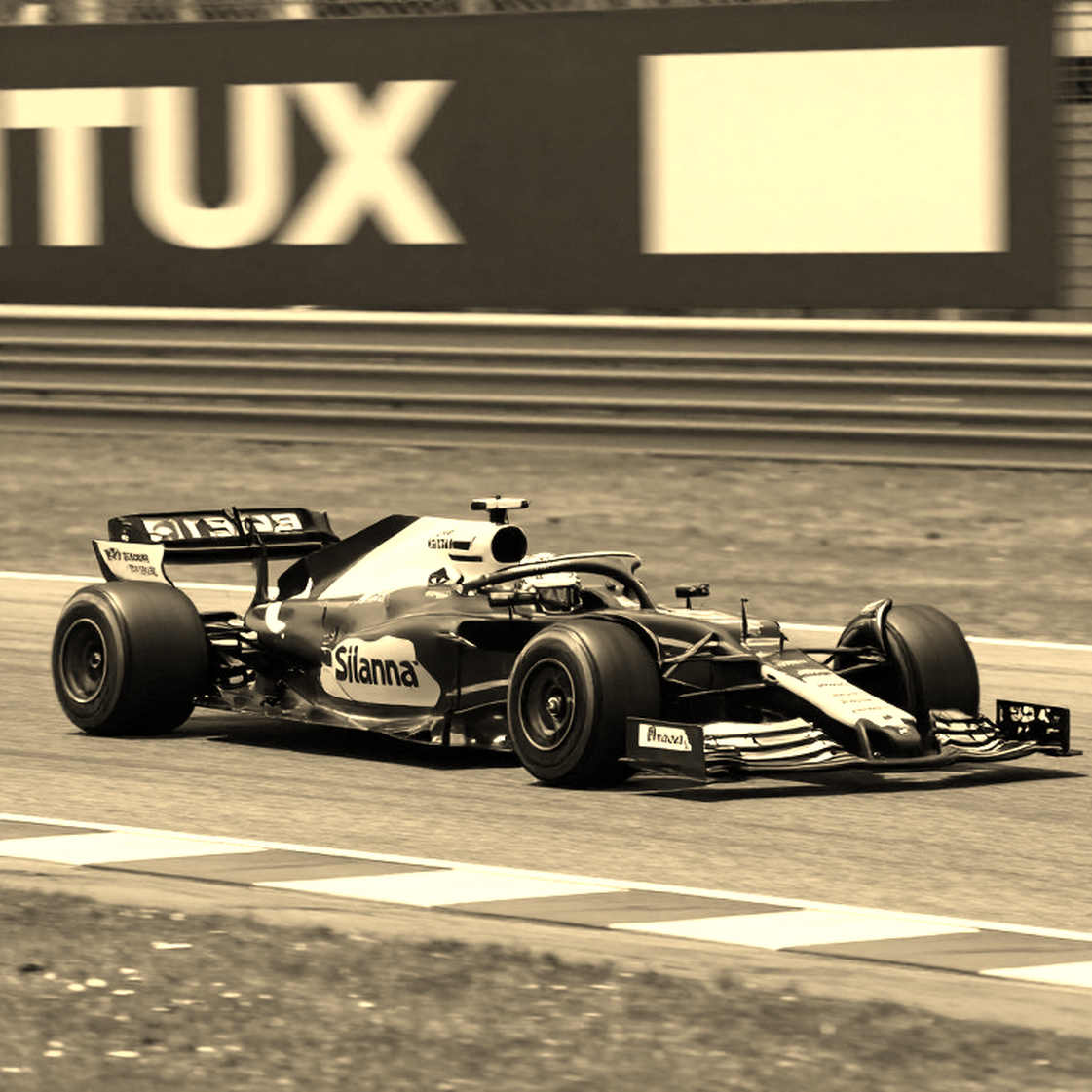
Now the question that troubles me most: a low-speed deficit is the most expensive trait on this calendar. It degrades a single qualifying lap, because most circuits' low-speed corners are traction-limited. It damages race pace in traffic, because dirty air amplifies a weak front end. And it makes the car exploitable at venues where the low-speed content is longest — Monaco, Singapore, Hungary. That is why Piastri's fifth in Singapore is better than it looks. It is also why it is the ceiling. A car that survives its weakness to finish fifth cannot convert its strength into third at the same circuit.
And COTA? The driver supplied the words: a combination of very high speed and pretty low speed, with a long low-speed section, so it will challenge everything. I read that sentence three times. It is not a circuit description. It is a forecast. COTA neutralises this car's strength and amplifies its weakness. Downforce traded away in Sector 1 buys room in Sector 3 — but when the weakness is structural, that compromise moves the car toward the field, not ahead of it.
This is where the story starts somewhere else for an Indian reader. A Sunday night in Pune, forty people on a video call, and the same question every week — whether this team is still where we put it. In 2026, when the stands were empty and we were all indoors, I wrote that the show was never the grandstand. Today I am writing the other side of that sentence. Fandom is growing and access is not, and those were never the same number, though we keep treating them as one. Netflix built a new, younger Indian audience that had never seen a race in person. That audience is sold a story every week — and 'signs of progress' is the easiest story to sell, because verifying it requires sector times that sit behind a paywall nobody reads.
I will put the strongest version of the other side myself, because a reader who arrives at the fight knowing I have read it cannot beat me easily. I could be wrong, and here is the best way I could be wrong.
Look at the points. Two DNS in the first two rounds is a hole of roughly thirty points, and it has nothing to do with car concept. That is a reliability story, not a performance story. Remove those two zeroes and replace them with what a normal race delivers — because this car was third in Japan and third in Miami — and the picture flips. Then Baku. Thirteenth was driver error, acknowledged by the team. Remove that too. What remains is third, third, sixth, fifth. That is not the record of a crisis. It is a queue of events with no relationship to each other — and I have learned that when a season's events stop connecting, people invent a concept story to connect them.
Second, I could read 'you can't quickly fix it' as sandbagging. Teams say that before a big package on purpose, because it lowers the rival's expectation and doubles the credit if the package works. And if COTA is a Sprint weekend — unconfirmed in this material — then one free practice session makes correlating new parts nearly impossible. My 'marginal upgrade' grade could be wrong in either direction: the parts could be substantial and the missing session made them look small, or the parts could be nothing and the team built a story. Either way I do not have the track data, and I will not hide that gap.
Third, and least comfortable. The word 'progress' may be entirely honest. Third in Japan and Miami, sixth in Malaysia, fifth in Singapore is not the record of a broken car. It is the record of a car that knows its limit and is extracting points inside it. My whole argument is that this limit will not break until the next car. But if the team has genuinely changed concept late in the season, my entire ledger thesis dies in a single race. I accept that possibility, because I do not make predictions that cannot be falsified on track.
So I end on a prediction you can check yourself on Sunday. Watch Sector 3 in COTA qualifying and compare it with the team mate's Sector 3. If the gap stays inside fifteen hundredths, the new parts worked and I have to revise my grade. If it climbs past twenty-five hundredths, then the word 'progress' has been saved for next season, and this one will end the way it began — with a car that is beautiful in fast corners and helpless in slow ones.
And after that, the question no press conference answers remains. Progress for whom? For the car, for the team, or for the story that gets resold every Thursday? I went looking for the timing sheet behind that headline and came back empty-handed. Coming back empty-handed is also a result — because in a sport where sector times are available to everyone, a story built from adjectives tells you something on its own.