
Paris Final: For Sindhu, the 73 Minutes Matter More Than the 0–10
**मुख्य उत्तर:** पेरिस फाइनल में आन से यंग का पलड़ा भारी है क्योंकि उनका रैली-कंट्रोल खेल सिंधु के पावर खेल की लागत बढ़ाता है। सिंधु की असली बढ़त जल्दी अंक, छोटी रैली और सेमीफाइनल की 73 मिनट थकान से मिलने वाली अनिश्चितता है। **मुख्य तथ्य:** - फाइनल 25 अक्टूबर 2026, सुबह 11:00 स्थानीय/15:30 IST, एरिना ग्रैंड पेरिस में। - हेड-टू-हेड आन से यंग 10–0; 2026 में दो सीधे गेम में जीत। - सिंधु ने सेमीफाइनल 21-10, 20-22, 21-16 में 73 मिनट में जीता। - आन से यंग इस सीजन एकमात्र हार मार्च में वांग झियी से। - आन से यंग के सेमीफाइनल की अवधि उपलब्ध नहीं; थकान का अंतर अज्ञात। **स्रोत:** Khel Now, 24 अक्टूबर 2026; मैच समय और सेमीफाइनल स्कोर उपलब्ध टूर्नामेंट रिपोर्ट से। **संबंधित प्रश्न-उत्तर:** प्रश्न: क्या सिंधु का 0–10 रिकॉर्ड फाइनल में मायने रखता है? उत्तर: हां, यह दबाव कम कर सकता है, लेकिन रैली की लंबाई नहीं बदलता; असली मुद्दा त्रुटि नियंत्रण है। प्रश्न: सिंधु के लिए जीत का रास्ता क्या है? उत्तर: पहले गेम में तेज शुरुआत, छोटी रैली और 60 मिनट से कम का मैच; लंबी रैली में आन से यंग का पलड़ा भारी है। प्रश्न: क्या आन से यंग अजेय हैं? उत्तर: नहीं; वांग झियी ने मार्च 2026 में उन्हें हराया, पर वह जीत लंबाई और धैर्य के अलग पैटर्न से आई।
Paris, 24 October 2026
Sitting on the media bench at Arena Grand Paris was necessary this time. From the press box you do not feel the hall's drift; from court level you see the small asymmetry in the shuttle's flight that matters second by second in a big match. PV Sindhu's semi-final read 21-10, 20-22, 21-16. The scoreboard said 73 minutes. At 20-22 in the second game she paused for a second before picking up the shuttle, walked to the baseline, wiped her grip. The coach said something; the sentence stayed unfinished. Then came six straight points in the decider. Those six points are the brightest light before the final, and the biggest question too.
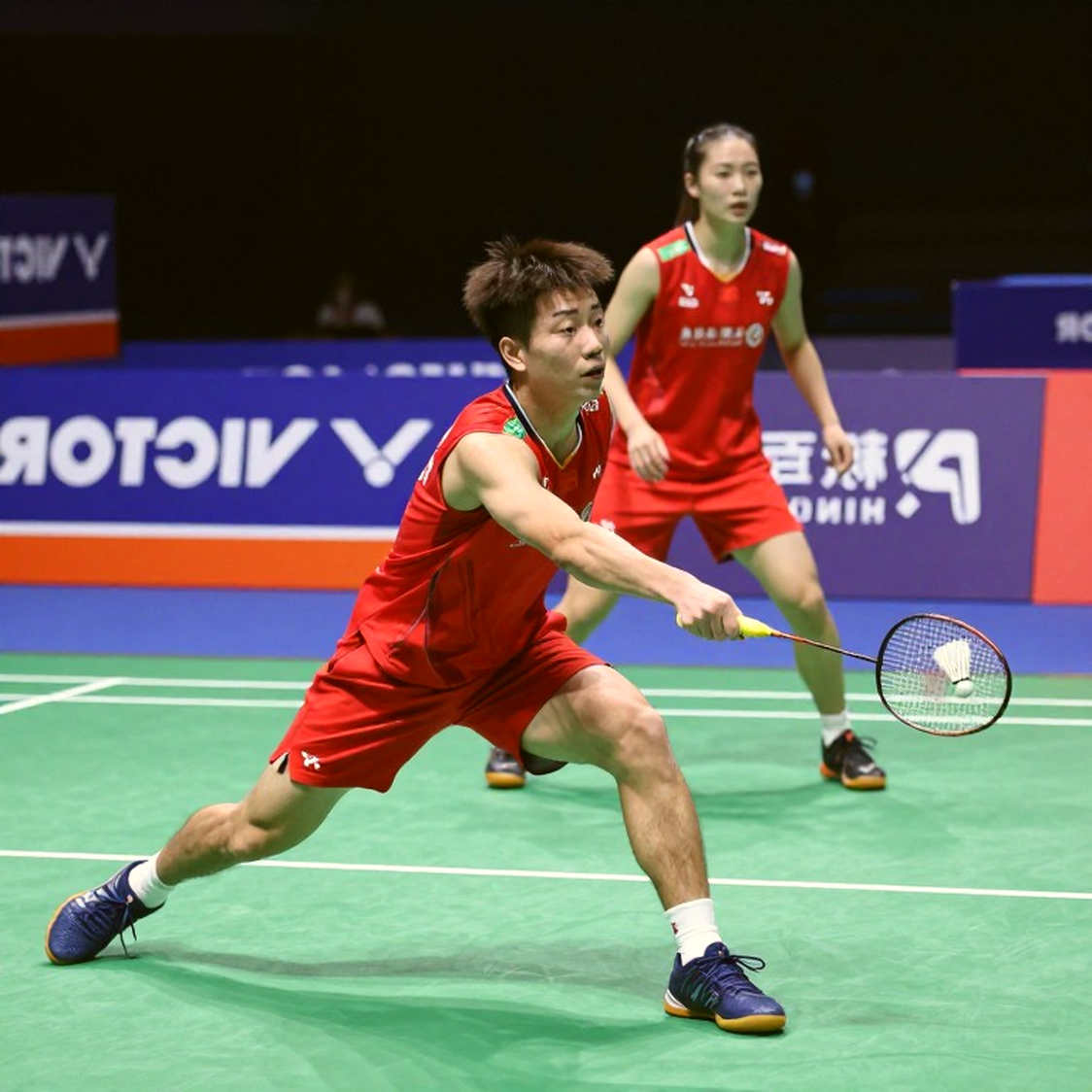
The final is on Sunday, 25 October 2026, at 11:00 local time/15:30 IST against An Se Young. Social media is passing around a 0-10 head-to-head. Two straight-game losses this season. World No. 1. Age 24. Six titles from seven tournaments this season, according to Khel Now's report of 24 October 2026, though another part of the same report counts seven titles after the March loss. The inconsistency looks small, but before a final it tells you how much information is arriving by copy-paste.
I followed the side beat until it became the main story. The main story of this match is not 0-10; it is 73 minutes. The head-to-head tells you the result. The clock tells you the process. The notebook opens before the stadium lights do, and that page has two columns: what the scoreboard says, and what the legs say. In this final the two columns are arguing with each other.
The French Open 2026 is a Super 750. Arena Grand Paris, an October morning, an 11:00 final. Evening matches usually come after the shuttle speed and hall temperature have settled; in a morning final a player has to read the air in the first game itself. Sindhu is 33, playing her second Super 750 final of the season, and won the Japan Open in July. An Se Young is 24, world No. 1, and her only loss this season came to Wang Zhiyi in March. She reached the final by beating Hina Akechi in the semi-final.
But what An Se Young's semi-final cost her, how many minutes, how many three-game rallies, is not stated in any available report. That is the biggest hole in this preview. We can measure Sindhu's 73-minute fatigue; we cannot measure An Se Young's. One side has a clock; the other side has a blank page. The final's story begins with that imbalance.
Every chant remembers the room where it was born. The chant ‘Sindhu has nothing to lose’ was born in a press conference, not a locker room. In the locker room the talk was fatigue, sleep, fluids, shuttle speed and the next morning's warm-up. A locker room tells you the score before the broadcast does, and this time the score was not 0-10 but ‘how long can she hold?’
An Se Young's game is rally-and-drop control, with defence turning into counter-attack. Sindhu's game is power, steep smash and a high contact point; her 179cm reach is her biggest capital. This is not a skills-gap contest; it is a cost-transfer problem. Every extra shot shifts the value of the rally toward the lower-error player. Sindhu needs short rallies to win; An Se Young lengthens them and turns the attack into a tax.
Rally scoring to 21, best-of-three, must-lead-by-two: the format punishes error variance more than it rewards peak shot quality. An Se Young's profile fits the format; Sindhu's profile takes the risk. To say An Se Young is more talented is a cheap conclusion. The sharper point is that her low-error game pays less interest under this scoring system.
The 0-10 record is real, but it is not a document of process. Two straight-game losses this season mean An Se Young has a map that has already worked against Sindhu. But smash speed, average rally length, net win-rate: none of those numbers are available. 0-10 is a headline, not a scouting report. A headline tells you who won; a scouting report tells you how. Before this final we have the first, not the second.
The semi-final's first game was 21-10. That is a sample of a peak, not a trend. A 21-10 game means Sindhu's attack was working that day, that the shuttle was creating pressure as soon as it left her racket. The second game was 20-22. What changed in between: the hall's drift, the shuttle's speed, or Sindhu's concentration? There is no proof of any one of them, but there is a signal from all three. The six straight points in the third game show that she is still dangerous in the clutch.
The pattern has one reading: the peak is still available, but it is not holdable for more than 60 minutes. That is not an insult to her age; it is the cost curve of a power game. Explosive repetition is expensive at 33. The longer Sindhu's match goes, the more interest her muscles and lungs charge. The 73 minutes of the semi-final are that interest, paid 24 hours before the final.
An Se Young's semi-final duration is unknown, so the fatigue differential looks negative for Sindhu, but the scale is incomplete. If An Se Young won in two short games, the gap is large. If she also played three, the gap is small. Where one side has a clock and the other has a blank page, fatigue should be treated as a condition, not a verdict.
An 11:00 final brings its own arithmetic. In a slow hall Sindhu's smash penetrates less; in a fast hall An Se Young's length can go long. The 20-22 in the semi-final's second game may have been connected to shuttle drift. If the same drift repeats on Sunday morning, another wobble is possible in the second game. This is inference, not evidence; but in a big final the notebook makes room for inference too.
Wang Zhiyi's name is being thrown around most before this final. She is the only player to beat An Se Young this season, in March. The media line is: Sindhu should draw inspiration from Wang. That is a feeling, not a blueprint. Which serve pattern Wang used, what length she held, what defensive shape she built: none of that is in the inspiration sentence.
Wang's win came from length, patience and low error. Sindhu's identity is power. If Sindhu tries to play like Wang, she has to loosen her biggest weapon; if she does not, how does she reduce error? That is the real technical tension. ‘Inspiration from Wang’ hides it. Sindhu's question is not how to copy Wang, but how to draw a new boundary between her attack and her error count.
An Se Young is not invincible. The March loss is a document that she can be beaten. But the document belongs to a player with a different style. For Sindhu, the path is not to break An Se Young's invincibility; it is to break the length of the rally. If the rally stays under eight shots, Sindhu's chance is alive; if it goes above twelve, An Se Young's side of the scale gets heavier. That is not a magic number; it is the direct arithmetic of power against retrieval.
The weakest link in this preview is the data. Twenty-four of 26 information points carry no named source. Sindhu's current ranking is not mentioned. There is no smash speed or rally length from any match. One report gives the arena three names: Grand Paris Arena, Arena Grand Paris, Arena Grand in Paris. The season's titles are both six and seven. It is a small disorder, but before a final it reminds you how much information is arriving by copy-paste.
Where the numbers are incomplete, write conditions, not predictions. I am looking at this final through 73 minutes rather than 0-10, because 73 minutes was measured and 0-10 was repeated. There is a difference between a measured fact and a repeated fact. The final's story begins with that difference.
The most popular line outside is: ‘The pressure is on An Se Young; Sindhu has nothing to lose.’ That is half true. Pressure relief opens the arm, and the first game can be aggressive. But relief does not shorten a rally. ‘Nothing to lose’ does not win points; it only frees the hand. 0-10 can free Sindhu, but it can also show An Se Young the map. The underdog chant is cheap until the process changes.
The second popular line: ‘An Se Young is invincible.’ The March loss to Wang breaks that claim. But the proof belongs to a player with a different style. To beat An Se Young you need length, patience and error control; Sindhu has power, height and quick points. The two paths are not the same. So the answer to ‘invincible’ is bigger than ‘she can lose’: she can lose, but not to Sindhu's weapon; to Sindhu's patience.
The third mistake is to treat this final as data-rich. It is data-thin. We have the head-to-head, the semi-final score, the ages, the ranking. We do not have rally length, smash speed, net win-rate, or the duration of An Se Young's semi-final. Silence is a sound the locker room still makes. That silence is not about 0-10; it is about recovery.
On the morning of 25 October, Paris will also count 0-10, but the real interest is the 73 minutes. The first 15 minutes will show whether Sindhu can run her plan or whether An Se Young is pulling her into rallies. If Sindhu builds an 11-7 lead in the first game and the rallies stay under eight shots, the final is open. If An Se Young drags the first game past 20 minutes and the rallies go above twelve shots, the match's gravity will tilt toward her.
The score will be visible in points; the story will be in the shot count. The final may be decided not by a spectacular smash but by the 11th shot of a rally. Sindhu has a path: short, fast and ruthless. An Se Young has a path too: long, patient and error-free. The two paths meet on the same court. Can Sindhu pay the interest on 73 minutes?